

The trouble with a cane is rarely the walking. It is the moment you set it down. A cane that leans against a table slides off. A cane that slides off ends up on the floor, and the person holding it either bends to get it or asks somebody, and the asking is its own small defeat. My husband Gene is 74 and has a weak right hip. He said no to a cane for eleven months. What changed his mind was not a speech from me. It was a borrowed cane sliding off the edge of a restaurant table at our anniversary dinner, hitting the floor, and a waiter having to fetch it while Gene sat there with his hands in his lap.
We bought the HurryCane Freedom Edition the next week, mostly because it stands on its own when he lets go of it. Two years later it lives beside his chair and he uses it every day. Here are ten plain reasons a freestanding cane helped with his balance more than the borrowed one ever did. I am not a doctor or a physical therapist and I will not pretend to be one. Dana, who is a physical therapist, is the one who told him which hand to use, and I will get to that.
The cane that stays standing so nobody has to pick it up
Gene has carried this one every day for two years. Aluminum frame, rubber handle, 16 ounces, folds to 13.7 inches, and it stands on its own. That last part is the whole reason we bought it.
Amazon Check Today's Price on Amazon →It stands up on its own, so nobody has to bend for it
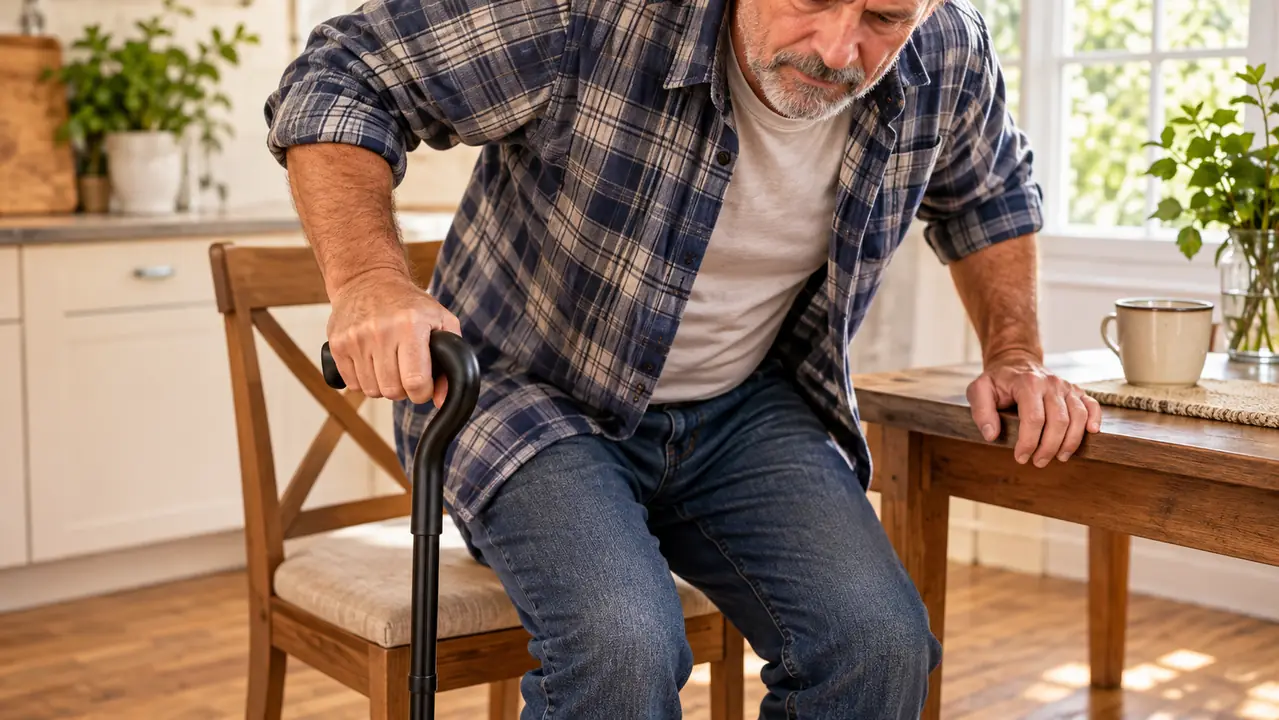
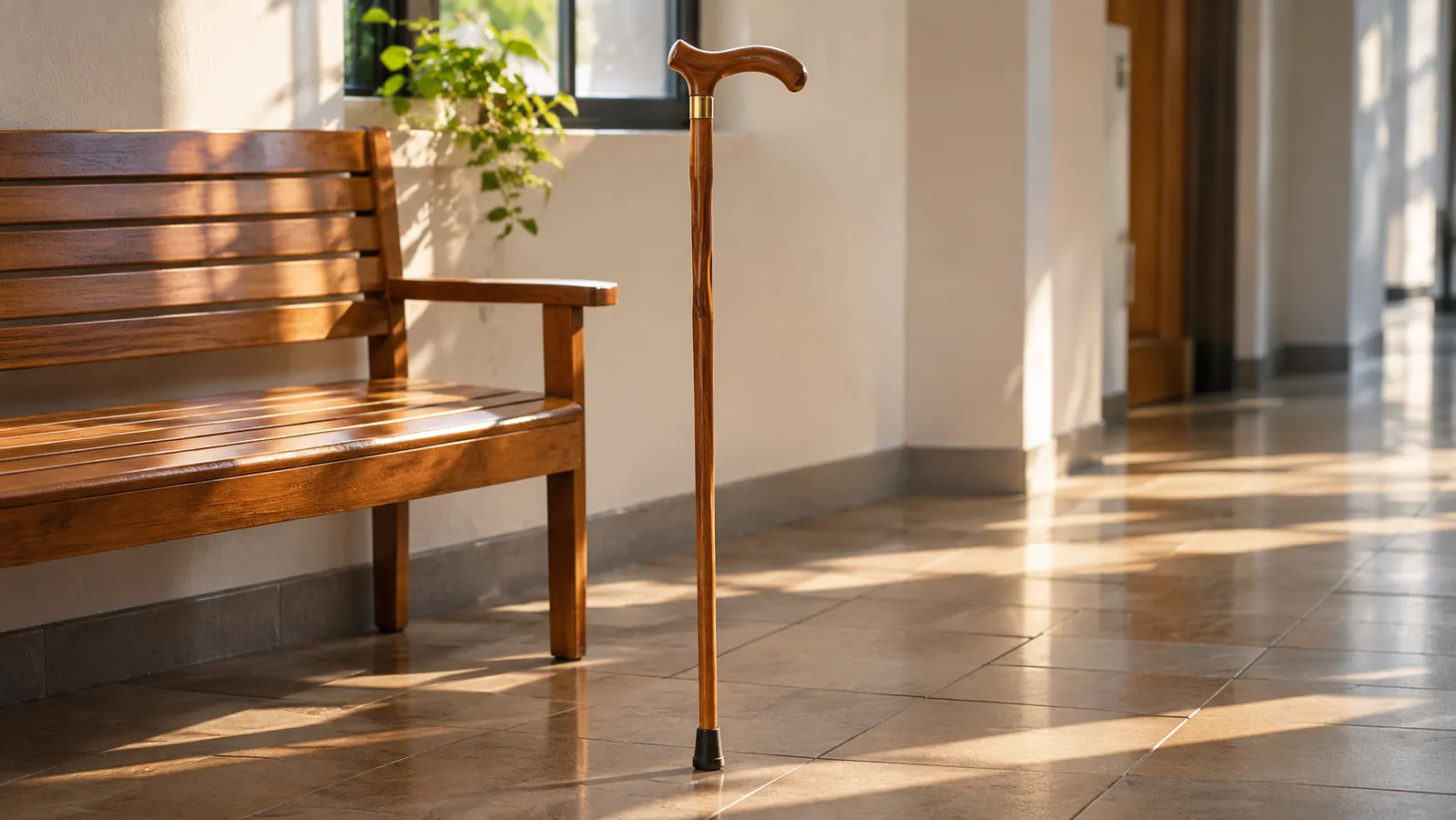
A cane on the floor is a small emergency. Somebody has to bend, and if that somebody is the person with the balance problem, you have created the exact situation you were trying to prevent. This cane stays upright when Gene lets go. He sets it down beside the restaurant table, the doctor's office chair, the church pew, and it is still there at the same height when he reaches for it. That sounds like a convenience. It is really a safety feature, and it is the single reason we chose this one over the plain cane the hospital sent me home with after my knee replacement.
The height range fits a tall husband and a short wife
It adjusts from 30.5 inches to 37.5 inches, a wide enough spread that it suits Gene at 5 foot 10 and would still suit me at 5 foot 4 if I ever grabbed it on my way out the door. A cane set too low makes you stoop, and stooping is how a person ends up leaning on the kitchen counter again. Dana measured him standing in his shoes and set it once. He has not touched the adjustment since. I check it about once a month to make sure it has not slipped, the same way I check the smoke alarms.
Sixteen ounces is light enough that he actually carries it
Our rollator is 20 pounds. It is a good machine and it lives in the garage, because neither of us wants to lift it into the trunk for a ten minute errand. The HurryCane is 16 ounces. That is the difference between a device you plan your day around and a device you pick up without thinking. Gene takes it to the mailbox, into the diner, through the church doors on Sunday. The best mobility aid is not the fanciest one. It is the one in your hand when your hip decides it has had enough.
It folds to 13.7 inches and rides in the car without a fight
Folded, it is 13.7 inches, which fits on the floor behind my seat or in the well between the front seats. Nothing has to be clamped or strapped. When we get to the farmers market he unfolds it in the parking lot and the lock catches, and when we get home it folds back down and rides to Tuesday. Folded it is still a little bulkier than a straight cane, and I am not going to pretend otherwise. It is smaller than the rollator by a country mile, and that is the comparison that matters to us.
The T handle lets his whole hand get around it
The handle is rubber and shaped like a T, so his fingers wrap around a bar instead of pinching into a crook. He has some arthritis in his thumbs, and he says the flat grip is easier to hold for a whole hour of church than the curved handle on my old cane. Rubber will get slick if his hands are damp, so he wipes it on his trousers before he stands up. That is a two second habit, not a defect. If your hands are weak, this is worth paying attention to.
It goes in his left hand, opposite the weak right hip
This is the part most people get wrong, us included. Gene's bad hip is on the right, so the cane belongs in his left hand. Dana showed him in about ninety seconds. Left hand, cane forward with the bad leg, then step through. At first he held it in his right hand because it felt more natural, and it was doing close to nothing for him. The cane did not change his hip. The hand did. If you take one thing from this list, take that one, and have your own physical therapist check your grip.
The aluminum frame and the limited lifetime warranty
The frame is aluminum, so it does not rust in the car trunk through an Ohio winter, and the base is resin, which has held up on our cracked sidewalk and the church parking lot for two years. The warranty is a limited lifetime one. I have never had to use it, and I like knowing it exists the way I like knowing the spare tire is in the trunk. Nothing on this cane feels flimsy. Gene is not gentle with anything, and it is still the same cane we took out of the box.
It got him past the front door, which was the hard part
The cane did not fix Gene's balance and I am not going to sit here and tell you it did. What it fixed was the argument, and the argument was the real obstacle. A plain cane felt to him like an announcement to the whole street. This one stands beside his chair and he picks it up the way he picks up his reading glasses. Three steps up to the front door, the crack in the sidewalk, the curb at the hardware store. He does them now without the long pause he used to take, and the pause was what had me worried.
It steadies the small moves, not just the walking
Most of the falls I hear about from women my age do not happen out on a trail. They happen standing up out of a chair, turning from the sink to the stove, stepping off a curb. Gene plants the cane and pushes up out of his chair with it. He uses it to pivot in the kitchen. Those are ten second moves and they were the ones that scared me. The cane is in his hand for all of them because it is already standing next to him, waiting, not leaning somewhere across the room.
It bought back the short trips, which are most of the trips
Nobody takes a rollator to the mailbox. Ours comes out for the county fair and the farmers market, and it earns its keep there. The cane is what gets Gene to church on Sunday, to the diner on Wednesday, down the driveway for the paper. Small errands, and they were the ones he had quietly stopped doing. I noticed before he said anything. He came back up the drive one morning with the mail in his hand, and it had been a while since I had seen that.
What I'd Skip
Skip buying a cane before someone checks which hand you should be using. Skip any cane you have to lean against a wall, because there will not be a wall in the church parking lot. Skip the idea that this cane replaces the rollator on a long day at the fair, because it does not, and Gene will tell you so himself after two hours on his feet. The base on the HurryCane is wide, and it catches now and then on a threshold or the metal strip at a store entrance. He has learned to lift it half an inch at doorways. That is the honest trade for a cane that stands up on its own, and I would make it again. And skip the pride part if you can manage it. Eleven months is a long time to spend sitting down.
Gene's bad hip is on the right, so the cane belongs in his left hand. Dana showed him in about ninety seconds. The cane did not change his hip. The hand did.
Two years by his chair, and it still stands up on its own
16 ounces, folds to 13.7 inches, adjusts from 30.5 to 37.5 inches, rubber T handle and a limited lifetime warranty. If you have been putting this off, you already know why. Ask your physical therapist which hand, then look at the cane that will not end up on the floor.
Amazon Check Today's Price on Amazon →